Who Are the Angels?
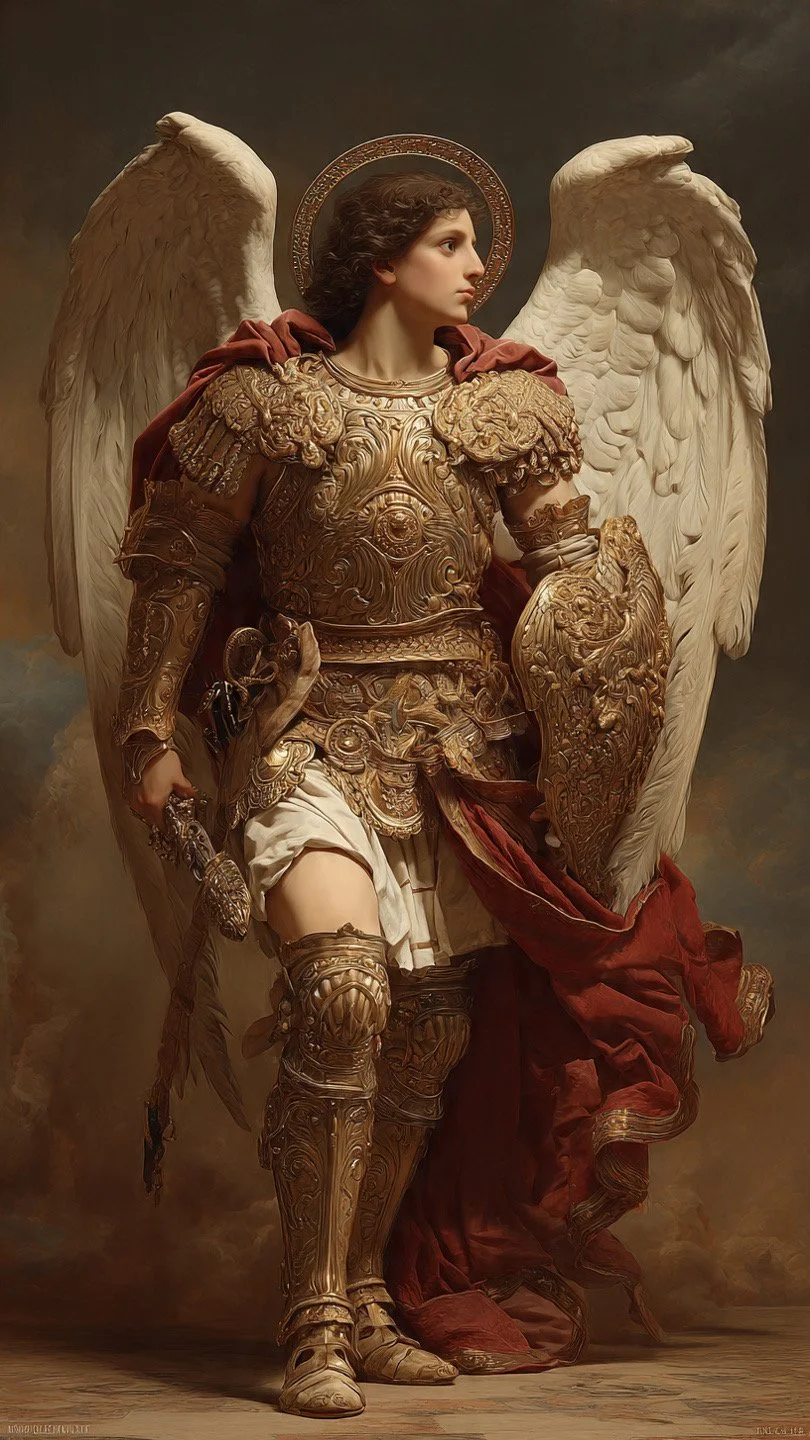
Angels are divine benevolent immortal spiritual beings of light who have been referenced in all major religions and most cultural traditions. Though most angels are referred to generally as angels, Malak (Arabic), or Malalch (Hebrew) in scriptures few have been specifically named. They were individually created before the creation of humans by source/ God for various reasons.[1] In Islamic traditions, Angles are described as beings of light created by God.[2] In the Quran they are referred to as “honored servants”,[3] who “possessing wings”,[4] “strictly obeying God’s commands.”[5] “who rebuke evil”,[6] and “praise god.”[7]
The Bible describes angels as divine winged beings[8] with various roles, to bring divine messages to the profits and chosen ones (Archangel Gabriel),[9] protect against evil (Archangel Michael),[10] and heal and guide humans (e.g., Archangel Raphael).[11] There are many other abilities that angels have for example, all Archangels are capable of healing different aspects of the human body, mind, heart and soul for they are “greater in might and power” than humans.[12]
Types of Angels:
In addition to the roles of the specific angels mentioned above, Angels come in different forms (some have, two wings, while others have four wings or even eight wings) and spiritual hierarchy and powers which is confirmed both in the Bible and Quran. From Cherubim who guard sacred spaces, Seraphim who surround God’s Throne, to Archangels (“AA”) who are the chiefs of all angels. The Quran describe the hierarchy of angles who carry or sustain the Throne of God, “Those who sustain the Throne (of Allah) and those around it sing Glory and Praise to their Lord; believe in Him; and implore forgiveness for those who believe.”[13]
In Islam, Angels also serve as defenders or protectors of heaven who “prevent the devel from eavesdropping on the higher assembly, using piercing flames to drive them away”,[14] while the Angel Israfel (Israphile), announces the day of judgment by blowing the Soor (the Trumpet).[15] The prophet Muhammad (PBUH) said that “Israfel is awaiting the order of blowing while He grasps the trumpet”.[16] The Quran also mentions Azrael, the angle of death who grasp the souls of people whose death times have come,[17] Raqib and Atid, the two angels assigned to each human who are entrusted to record daily deeds and intentions, while Munkar and Nakir are broadly mentioned in the Quran, and expanded on in Hadith, as the angles of the grave.[18] They are described as the angels who question humans after death.
Consistency in the reference to Angels:
Some of the Angles are confirmed in both the Bible and the Quran. For example, the Bible describes AA Michael, AA Gabriel, AA Raphael and Lucifer (the fallen Angle who rebelled against god).[19] The Quran references Jibreel (aka AA Gabriel) as the trustworthy spirit who bring revelations from God to the profits,[20] Mikael (aka AA Michael) (“Whoever is an enemy to Allah and His angels and His messengers and Gabriel and Michael - then indeed, Allah is an enemy to the disbelievers”),[21] Iblis (aka Lucifer), the angel who refused the order of God to prostate before Adam “refused and was arrogant and became of the disbelievers”[22] and the angels who are carry or sustain the Throne of God (aka Cherubim).
Conclusion:
Most religious and spiritual scriptures refer to Angels in a consistent and similar way, as divine beings of lights who follow source/ God’s will, keep order in the universe, and help guide humans. Angels are all around us, and they can help us heal and overcome many challenges in our life if we believe in them and allow their light to touch and guide us.
Though this article is not an exhaustive list of all references to Angels (the Book of Enoch for example also refers to AA Uriel), I hope that it served as an expansion of awareness as to who Angels are, their roles, and how they can help us in our human experience.
With love & Light.
2/3/2026
[2] Sahih Muslim (Book 42, Hadith 7134).
[3] (The Quran, 21:26).
[4] (The Quran, 35:1).
[5] (The Quran, 66:6).
[6] (The Quran, 37:2).
[7] (The Quran, 37:3).
[8] (Isaiah 6:2).
[9] (Luke 1:26–22); (The Quran, 2:97–98).
[10] (Revelation 12:7–8).
[11] (Tobit 12:15–18).
[12] (2 Peter 2:11, see also Matthew 28:2).
[13] (The Quran, 40:7).
[14] (The Quran, 37:6–10).
[15] (The Quran, 17:52 and 39:68).
[16] (Tabari Jami-ul Bayan, VII, 211; Ibn Kathir, Tafsiru’l-Qur’an-il Azim, Egypt, n.d. II, 276).
[17] (“Say, O Prophet, “Your soul will be taken by the Angel of Death, who is in charge of you. Then to your Lord you will ˹all˺ be returned.”) (The Quran, 32:11).
[18] (the Quran 36:65 and 24:35).
[19] (Isaiah 14:12).
[20] (The Quran, 2:97–98 and 66:4).
[21] (The Quran, 2:97–98).
[22] (The Quran, 2:34; 7:11–18, 15:30–44, and 38:71–85).